
Friday reflection
Your story, not theirs

Woman in blue floral dress with microphone
Hi there,
A confession: Over the years, I’ve enjoyed watching John Wick movies with my husband. We have such different taste in movies, TV shows, and music, that sometimes, we can find common ground in empty action movies, especially those that involve me being able to look at Keanu Reaves (he’s not my type, but that’s besides the point — the man’s appearance is compelling!). These action movie escapades only happen once or twice a year, but recently, even that level of interest has been difficult to summon, because of a trope that makes my skin crawl: Dead woman as plot device.
Plenty of other people have written about this lazy storytelling go-to, but increasingly, the pretty, mute wife or girlfriend whose memory incites our male hero to action has become unbearable for me to watch. So has watching men blow shit up. The world is full of that already.

Photo of a smiling woman - Helen Wick, aka John Wick's wife
Give me a Ted Lasso or Roy Kent over a John Wick, any day. Even better, give me a Rebecca Welton or a Keeley Jones, who by the way has been getting such short shrift this season that it’s breaking my heart (these are all Ted Lasso characters, for the uninitiated). Another female protagonist I’ve been enjoying a lot of lately: Jessica Williams’s Gaby on Shrinking. Smart, emotionally intelligent, self-possessed, funny….in other words, like most of the women I know in real life.
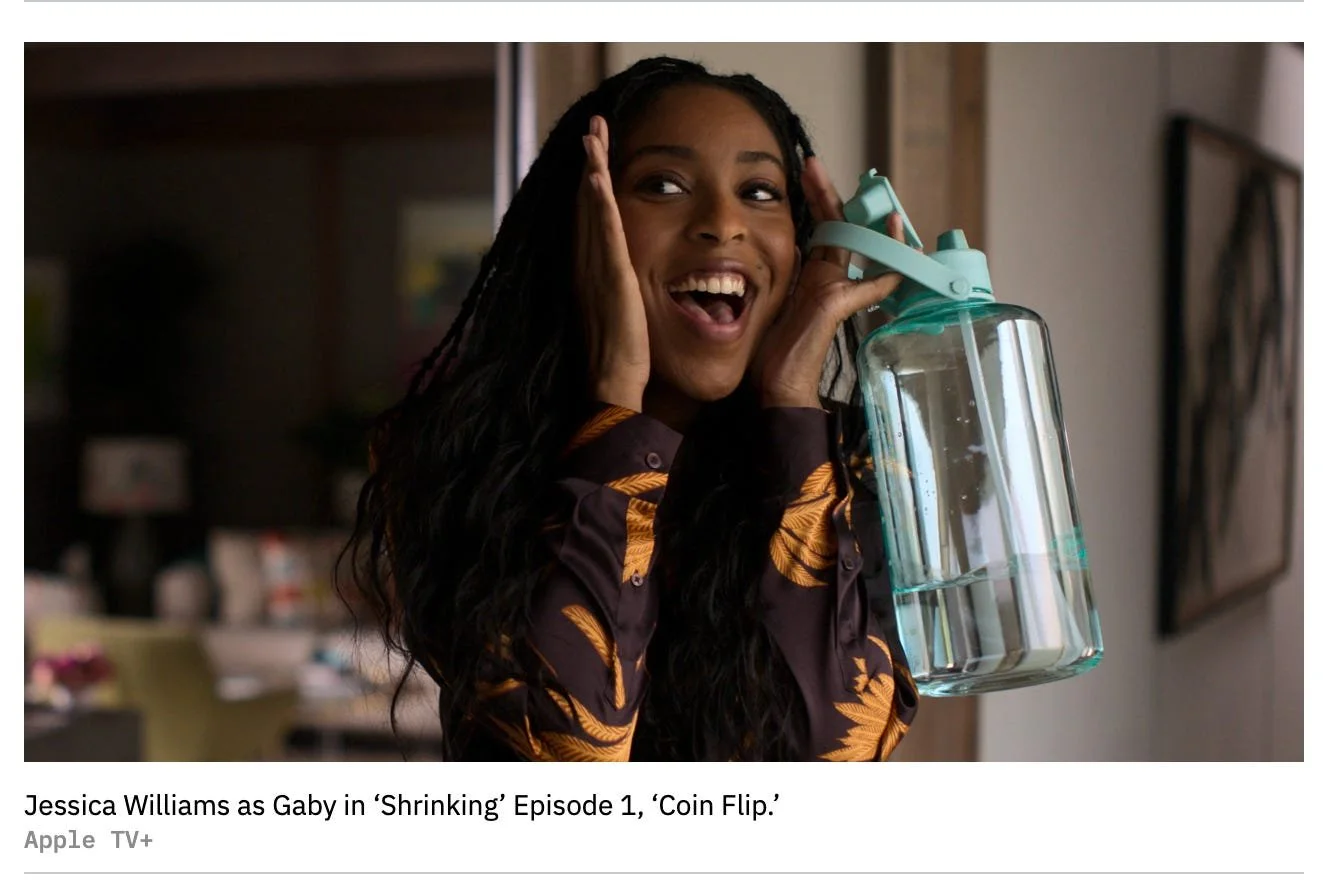
Photo of actress Jessica Williams as the character Gaby in "Shrinking" on Apple+. She has an animated facial expression and is holding a giant water bottle.
It shouldn’t be so hard to find those qualities in a woman on screen, or to include her in the marketing campaign, which, in the case of Shrinking, instead centers…wait for it… two white men: Jason Segal and Harrison Ford.
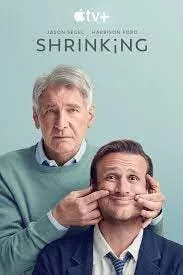
Shrinking - Rotten Tomatoes
They are both wonderful in the show, but without Williams, it would be just another white guy story, with, you guessed it, the dead woman plot device — Segal plays a guy whose wife died, and in his grief, he parties with hookers before going on a journey of self-discovery while the people around him help raise his teenaged daughter, Alice. The person who helps most is, unsurprisingly, a woman — not Williams’s Gaby, but Christa Miller’s Liz, who everyone on the show gives a hard time for over-involving herself in other people’s lives, which is fair, but maybe instead focus on the fact that she raised this adolescent human, fed her, cared for her, while dad went off the deep end. Hashtag unpaid women’s labor. (To be fair, Ford’s character provides Alice with free, off-the-books therapy/emotional support, so…hashtag men be helping. But it’s more of a weekly chat than the day-in, day-out work of parenting that Liz takes on.)
(Incidentally, when I looked up the Shrinking cast, the results that Google showed me gave the two white male leads’ characters last names, but the female characters, not to mention the supporting role played by a Black man, were given first names only. One day, ladies, we too will get full names!)
In case any of this seems like it’s “just” about pop culture, please read this article by author, journalist and lawyer Dahlia Lithwick called The Full Life of a Woman: From Stormy Daniels to E. Jean Carroll to Amanda Zurawski, women are finding a way past a very old trope. Lithwick’s astute analysis makes clear how our characterization of women-as-plot-device-for-men bleeds (word choice intentional) so seamlessly into our news coverage and public discourse…. and how, thankfully, more and more women are refusing to be painted with that tired, sexist brush.
Pop culture is never “just” pop culture. It’s a reflection of who we are — what we believe, consciously and subconsciously, about everything from gender roles to who is a hero, who is a villain, who who is a side character, without lines or a last name. Similarly, women are never plot devices for men. We are always our full selves, living our own stories — stories that transcend any pain that men or anyone else cause us. As Lithwick reflects,
...It is fitting that Trump most likely isn’t going to show up at E. Jean Carroll’s trial. It’s her story, after all. He’s just a bully she met along the way.
Questions for reflection
What shows are you watching these days? Movies? What podcasts are you listening to, what books are you reading? What stereotypes are the stories you’re consuming reinforcing or upending?
Look, too, at your own life: Are men defining the story of your organization, team, or project? Are you being relegated to being a side character or anonymous contributor for work you’re actually leading?
For a boost of inspiration, I highly recommend the novel, Lessons in Chemistry by Bonnie Garmus; the protagonist, Elizabeth Zott, is someone you’re gonna want to be friends with, or at least, someone you’ll be glad another woman, Garmus, took the time to imagine into existence, for all of our benefit.
You are a mighty force.
Amanda
P.S. May is Mental Health Awareness Month.What do you think it does to our mental health, to imbibe these tired, limited, dangerous tropes about women, over and over again? Consider donating to a nonprofit working to upend the stories we tell by and for women, such as the Women’s Media Center or the Journalism and Women Symposium. Consider, too, gifting a paid subscription to this newsletter as a way of supporting my coverage of women, storytelling, and power, including interviews with amazing women you won’t find anywhere else.