Optimism is strategic.
Optimism is strategic.
You can’t afford to stay stuck,
if you want to enjoy this one wild and precious life,
let alone create a better world.
Tell me, does any of this sound familiar?
I care deeply about helping people and about making the world a better place. I can’t imagine not being wired in this way.
I’ve overcome a lot of challenges to do the work I do, to carve my own path.
I compartmentalize my grief/fear/rage about the world in order to function, but I know the feelings are still there, just barely under the surface. It feels too big and too messy to open that can of worms; it’s much easier to focus on meeting other people’s needs. But not processing these feelings takes a toll on my health.
I am hyper-competent and really good at masking my own depletion — in fact, to other people, I may present as energetic and even upbeat. But the past ~10 years have left me exhausted in ways I fear I will never repair.
Too often, it feels like I’m going through the motions, rather than feeling embodied and present.
There’s this gnawing feeling that I’m meant to do something more, to activate some latent part of myself, some vision that’s just out of reach — but I don’t have the time, space, energy, or support to give birth to it.
I’m afraid I’ll reach the end of my life without achieving the impact I know I’m capable of, and without experiencing the fulfillment and joy that comes from aligning my life with my soul’s purpose, in service to the greater good.
If most or all of these statements resonate, then I have good news: You are in the right place. And you are far from alone. Join the Mighty Forces Community and experience the support, connection, and inspiration you need to fuel your authentic optimism.
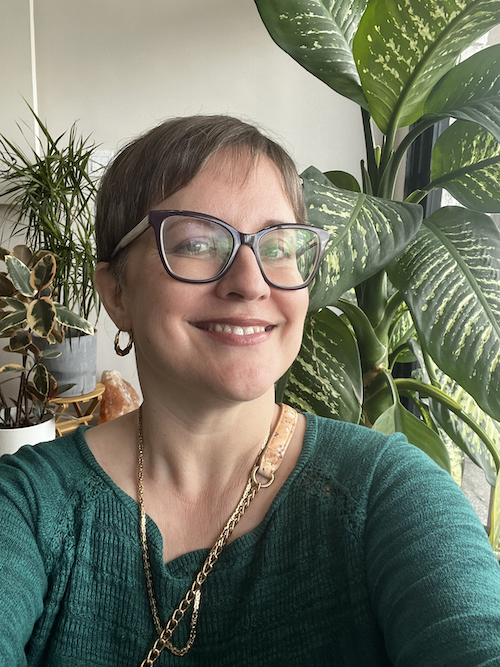
👋 Hi! I’m Amanda.
I’m the former editorial director of PBS.org, an award-winning SXSW speaker, and story coach to high-powered, mission-driven leaders.
If we’re listing fancy accomplishments, I graduated Phi Beta Kappa from an Ivy League school and have led workshops at another Ivy — “the” Ivy, in fact: Harvard.
Boy, I sure am fancy!
I am also a highly sensitive person who has clinical depression and anxiety. It is hard for me to find places where I feel like I belong, and yet, I believe we are all interconnected. What happens to one of us happens to all of us. And vice versa.
And that Ivy League school I attended? I was miserable there. Ditto my time at PBS, even though it was also deeply fulfilling and exciting in many ways.
The power of choosing optimism
So when I say that I am known for the light I bring into a room — and that I am known for my optimism — please know how much work it has taken for me to let that light shine… and for me to stoke the fires that keep that optimism alive.
And please believe how passionately I want to share what I’ve learned with you.
To state what I hope is already clear at this point, I am not interested in influencer-y, “drink the right smoothie and everything will be ok” optimism. I’m about real, rooted, authentic optimism. I sincerely believe in progress and possibility, and in the goodness of people. I pour this belief into my work with mission-driven leaders and others passionate about creating a better world, whether that’s through activism, through art, through how they live their lives, or all of the above.
…People like you.
How to Cultivate Optimism
In my half a century on this earth, here is what I’ve learned are the essential ingredients of authentic, grounded optimism.
Creativity
Creativity fuels optimism. We need space to be creative, to dream things into being — to imagine another way.
Intentional practice
Only the luckiest among us get to experience optimism by accident; usually, it is a fire stoked by intention. We have to look for reasons to believe. And then we have to look again. And again.
Connection
Optimism requires faith in other people, which means being connected to people who feed that faith, and who teach us, inspire us, and make us feel less alone.